Kenwood Cooking Chef XL and CookEasy+: a mixer and a processor that cook in the bowl
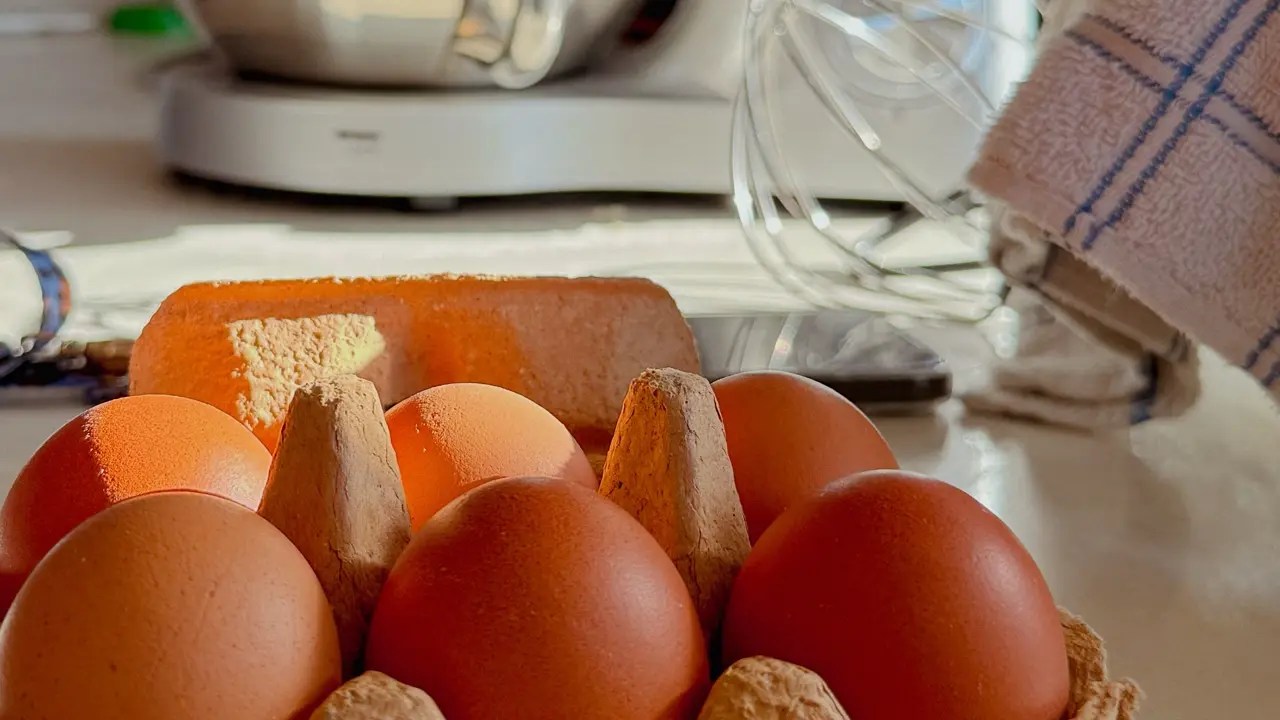
Two Kenwood machines cook in the bowl, and they are not the same machine. The Cooking Chef XL is a stand mixer that also heats. The CookEasy+ is a cooking processor: it chops, stirs and cooks, and it has soup presets. The figures here come from Kenwood pages checked on 19 October 2026. We did not cook with either machine. There is no price, because the pages we read do not publish one price that holds in every country.
Cooking Chef XL: a mixer that heats
On the specification table for model KCL95.004SI Kenwood lists a 6.7 litre bowl (the table writes 6,7), a wattage of 1,500, a 4.3 inch colour screen and induction heating. The same page describes a range of 20 to 180 degrees, in steps of 1 degree, and names chocolate tempering and stir-fries as the two ends of that range. The CookAssist screen sets the timer, the temperature and the presets, and it can show the next step of an app recipe. EasyWeigh weighs into the bowl, and also into optional attachments such as a blender, a food processor or a juicer.
Kenwood counts 13 SimpleTouch presets. The names it gives are kneading, Italian and Swiss meringue, dough proving, slow cook, steam and one-pot meals, plus seven more that the page does not name. The same page says there are 25 optional attachments, for the fast hub or the slow hub.
On model KCL95.424SI the table differs in the point worth checking before you buy: 2,000 watts, and the same 6.7 litre bowl. The capacities Kenwood publishes match across the two models: 4 kg of cake, 2.58 kg of dough, 16 egg whites, and 910 g of flour for pastry. The wattage does not match, so the code on the box matters.
Kenwood's energy comparison is tied to recipes in the Kenwood World app, not to every dish. For a slow-cooked beef stew, or a sweet-potato and red-pepper stew, Kenwood says the Cooking Chef XL is up to 45% more efficient than a class A+ fan oven. For the basic risotto it says 26% against one induction zone: the right front, 1400/2500 W, 145 mm across. Those are the maker's comparisons. We did not measure them.
CookEasy+: a processor with a soup preset
On the product page for the CookEasy+ CCL50.A0CP Kenwood describes one machine that chops, steams, stirs, kneads, mixes, weighs, slow-cooks, blends or stir-fries. The bowl is 4.5 litres, for meals of about 2 to 10 servings. There is a 4.3 inch colour touchscreen, integrated scales, and a temperature from 30 to 180 degrees in steps of 1 degree. Eight one-touch presets already set the time, the heat and the speed: one-pot meal, smooth soup, chunky soup, slow cook, steam, knead, proof and rinse. A prep tube slices, shreds or grates into the cooking bowl or into a bowl beside the machine.
In Kenwood's guide to the same machine some details are put differently from the short page. The bowl is stainless steel, and you can cook with the lid off. The motor is 550 watts and the heater is 1,500 watts. The integrated scale, according to the guide, measures from 1 gram to 6 kg, in the bowl or on the weighing platform. There are three stir speeds, nine continuous speeds and a no-speed setting. The steamer in the guide is dual-layered, at 7.2 litres. The tools listed there are dishwasher safe.
The pages do not agree on the number of presets, so we did not pick one list. The product page counts eight, and that list includes rinse and does not include sous vide. The guide talks about nine presets, and names one-pot meal, smooth soup, chunky soup, slow cook, knead, steam, sous vide and proof, and then a rinse preset as well. We did not open a machine to see which list is installed.
The energy comparison here is Kenwood's too, and it is again tied to recipes in the app. Up to 75% more efficient than a class A+ fan oven on those same two slow stews, and 44% against an induction zone with the same description, right front, 1400/2500 W, 145 mm, on a basic risotto.
What the network connection means here
According to Kenwood's questions and answers on connecting, before you connect, the router is on, the machine is plugged in and switched on, and you have the network name and password. On the Cooking Chef screen the path is settings, then Wi-Fi, then connect.
The CCL50 instruction manual, hosted on the De'Longhi group's document server, describes the same path: Settings, then WiFi, then Connect. Wi-Fi is 2.4 GHz only, IEEE 802.11 b, g and n, with WPA2-PSK. In the consumption table in that manual, measured on 25 June 2019, networked standby is 1.02 watts against a limit of 2.0 watts, and off mode is 0.0 watts.
On the app's page in the UK Apple store it says you can send recipe commands to a connected machine, adjust quantities, and get an alert when mixing, cooking or oven baking finishes. Cooking Chef XL and CookEasy+ are on the list of connected machines. On the number of recipes the same page says both "up to 1,500" and "over 1,500", and adds that the number depends on the language. We did not treat either figure as a fixed size of the library. Hebrew is not among the languages that store lists for this page. The list is English, Czech, Danish, Dutch, Finnish, French, German, Italian, Norwegian, Polish, Portuguese, Russian, Spanish and Swedish.
What we did not claim
We did not test taste, we did not measure the energy savings, and we did not decide which preset list is the right one. The "world's first" line in Kenwood's copy about induction heating was not checked here, so it is not part of the article. Shop stock changes too, and we did not rely on a category page that did not open when we checked.
More in the series, and a recipe that stays put
We wrote about another machine that cooks in a bowl in Thermomix TM7. On the Bosch Cookit and the Magimix Cook Expert, and on the gap between a connected machine and one that is not, we wrote in two cooking processors. Before you connect a machine to the network it is worth reading what actually needs Wi-Fi.
Not every smart way of cooking needs a new machine. According to the KitchenAppes homepage, cooking mode keeps the screen on and shows one step at a time, and timers start directly from the step that needs them. You can browse the community recipes on KitchenAppes and read more about us.
KitchenAppes
Download the app